

Chase Art Companies
A short interview with Bob Chase on the work, and the relationship, behind three decades of Dr. Seuss limited editions produced and published with Kolibri.
“We have to work with the absolute best. That's full stop.”
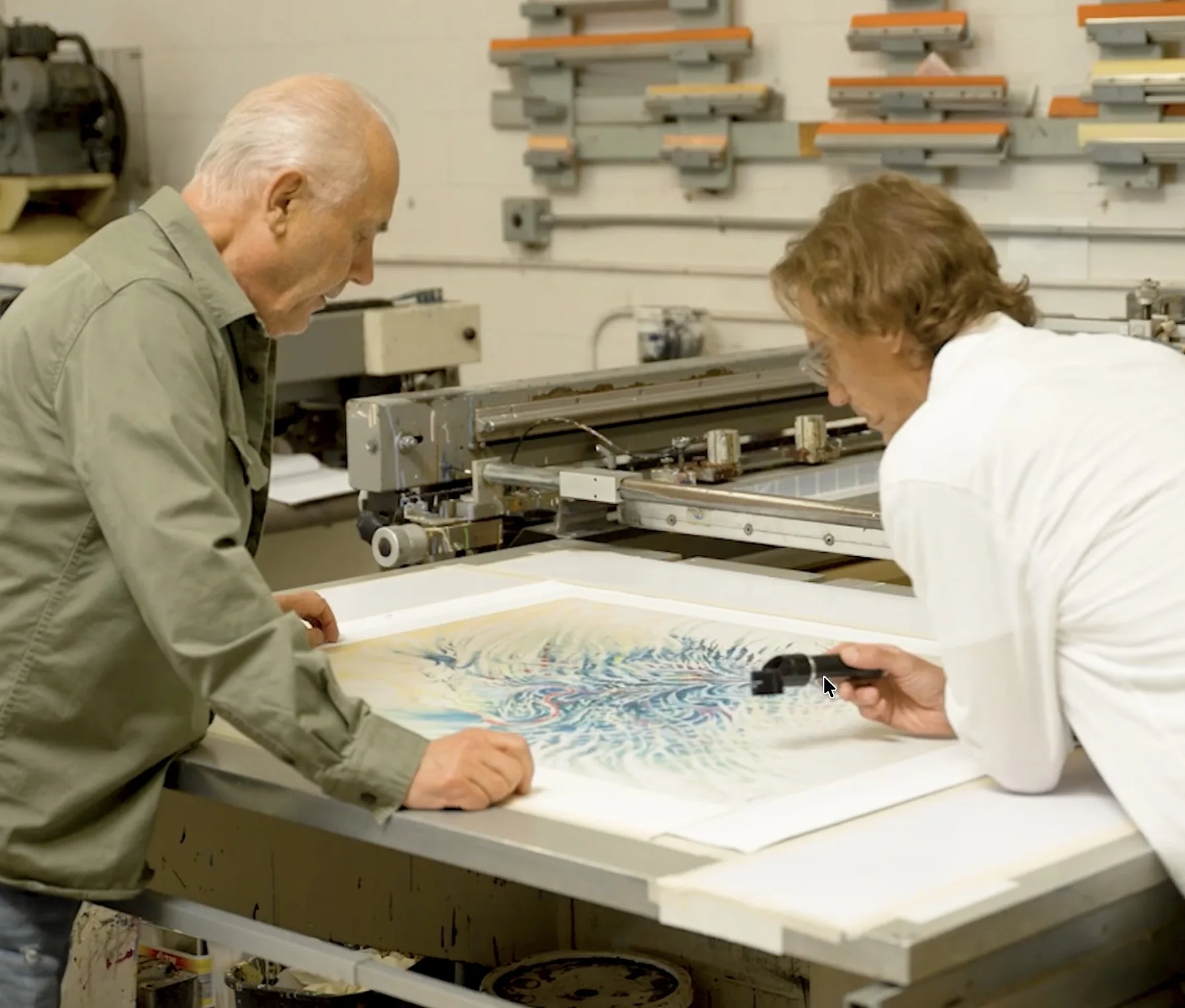
One collection, three decades
Bob Chase of Chase Art Companies represents the estate of Theodor "Ted" Geisel through The Art of Dr. Seuss Collection. He has brought that work to Kolibri since the collection began.
Some art projects can be handled by any competent printer. Dr. Seuss art is not one of them. Chase Art is responsible for recreating artworks that Ted Geisel made across his lifetime, for an audience that knows the work intimately.
30 years of the same collection, the same archive, and largely the same hands. Over that time with Kolibri the work has moved from a printing job to something closer to shared muscle memory.
“We're dealing with one of the most important American icons. This is a very, very important project, and we can't leave that to just anybody to help us recreate these artworks that Ted Geisel created in his lifetime. We have to work with the absolute best. That's full stop.” - Bob Chase, Chase Art Companies
Left hand, right hand
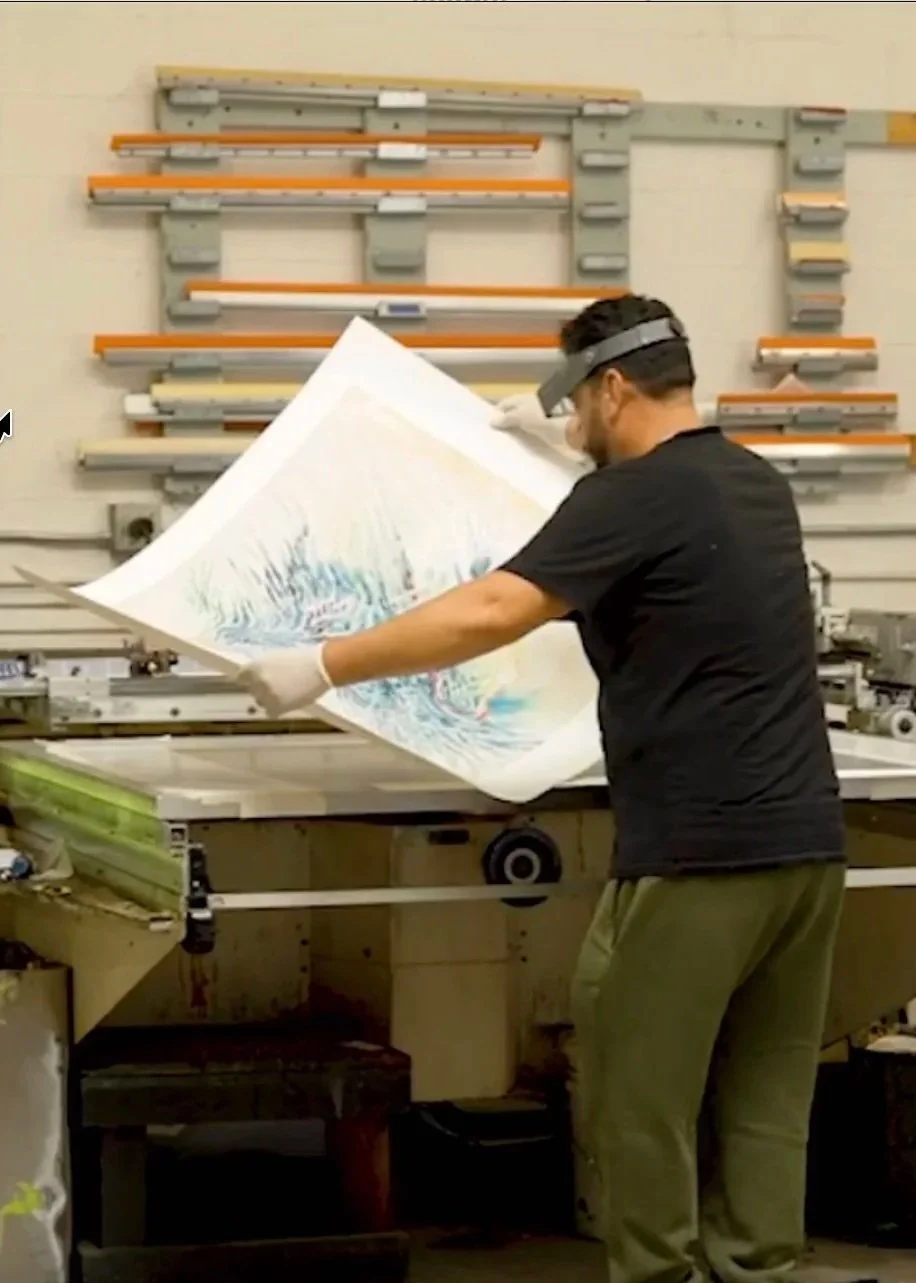
Long relationships change how work gets made. After years on the same collection, Kolibri's team no longer waits to be told what an image needs. Kolibri knows where a particular piece has to go to hold its fidelity.
That knowledge is not written down anywhere. It lives in the people who have pulled these prints before, in the memory of how a color behaved on a title from years ago, and in knowing which decisions Chase Art will want to weigh in on and which ones they trust us to make.
It also changes the pace of the work. Questions that would take a week of back and forth with a new printer get settled in a phone call. Fewer proofs go out because fewer of them are wrong. The time saved is real, and it comes from nothing more complicated than having done the work together for thirty years.
“What's happened over the years is we've become sort of like left hand, right hand. We can anticipate what we need to do with certain images. The (Kolibri) team knows where a particular piece needs to go in order to maintain the fidelity and faithfully reproduce the image. So they're already a step ahead, which I love.” - Bob Chase, Chase Art Companies
What it takes to print an icon
Matched to the Original
Color is mixed by hand and proofed against the original until the two agree. However many rounds that takes, it happens before the edition is printed, not after.
Separated In House
Separation is digital, guided by a separator's eye and hand. Where a color breaks and how layers overlap are decisions, not settings.
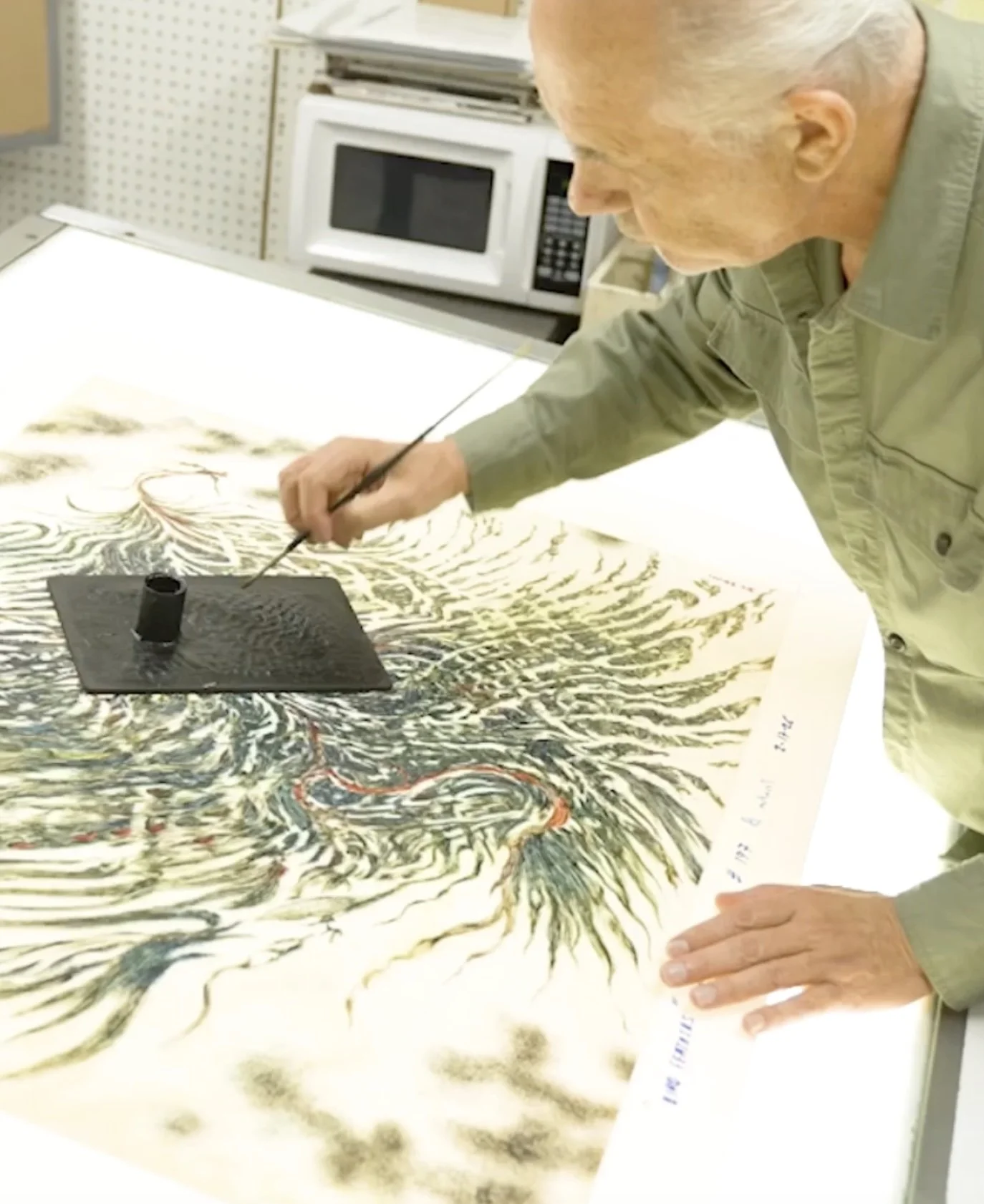
The newest technology, the oldest craft
At Kolibri a print is not a reproduction that happens to be signed. It is an object built one layer at a time.
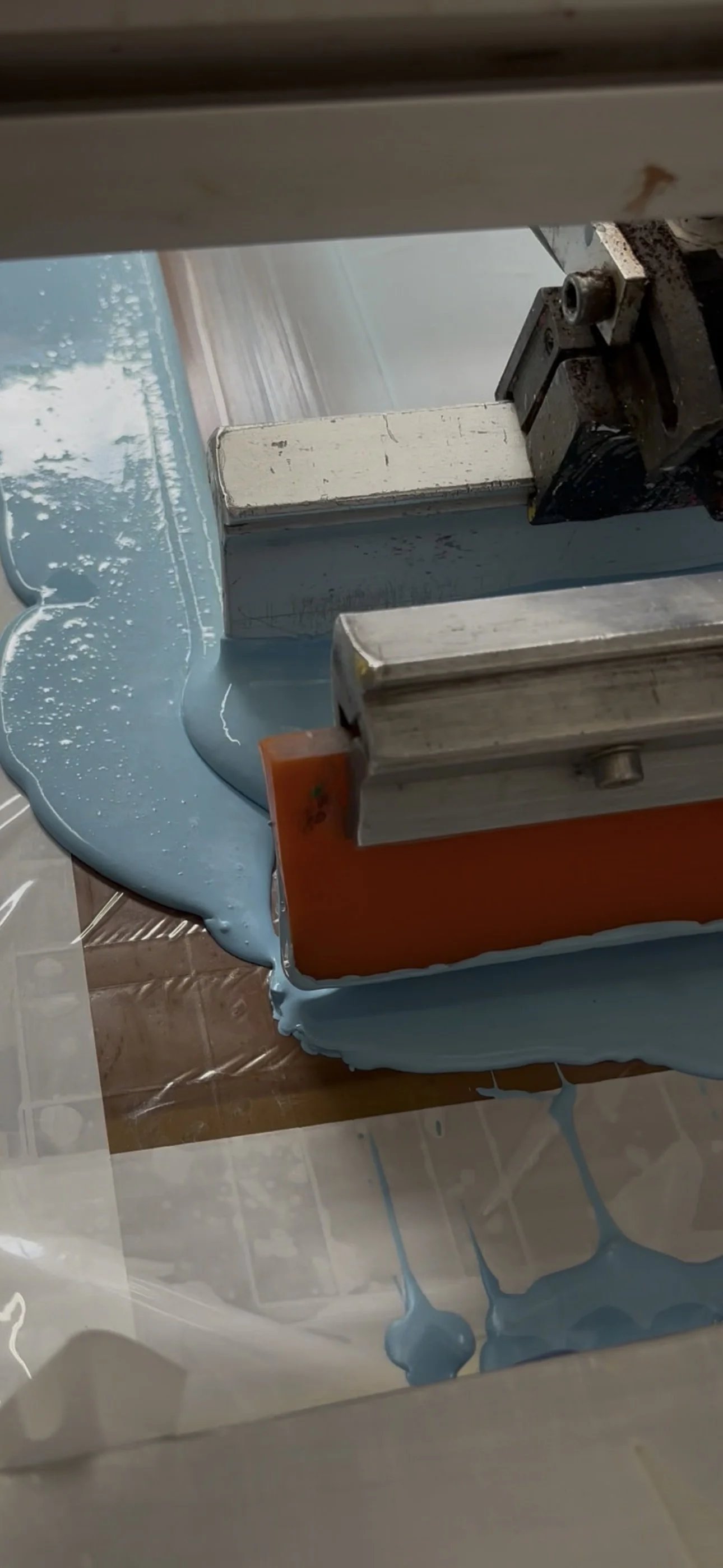
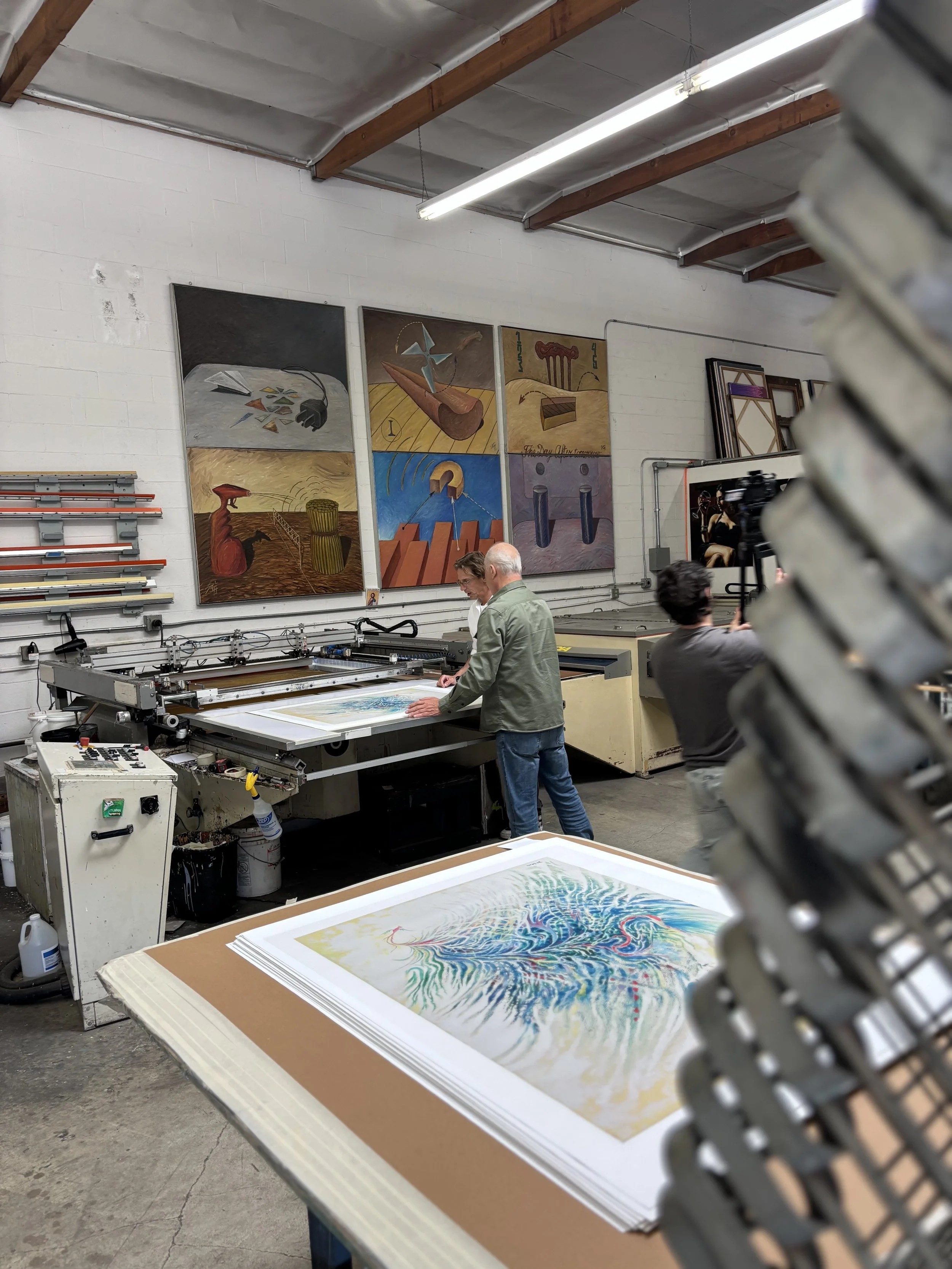
Serigraphy lays each color down as its own pass through its own screen. The ink sits on the surface of the sheet rather than soaking into it, which gives a serigraph a presence you can see across a room and feel with your fingertips. Most of what we produce is hybrid, what some publishers call mixed media: a giclée base carries the fine tonal transitions and the full spectrum of color, and serigraph goes down on top for spot color, density, and surface that digital cannot produce on its own. Hand-applied varnishes and specialty inks finish the piece.
Very few studios run both disciplines under one roof. Fewer still combine them in a single edition.
“What we're able to do with Kolibri, and virtually nobody else does this in the world, is marry the newest technology available in printmaking together with some of the most important historic printmaking techniques, and bring those two together. The objects that are created in that moment have a resonance to them that wouldn't be possible otherwise.” - Bob Chase, Chase Art Companies
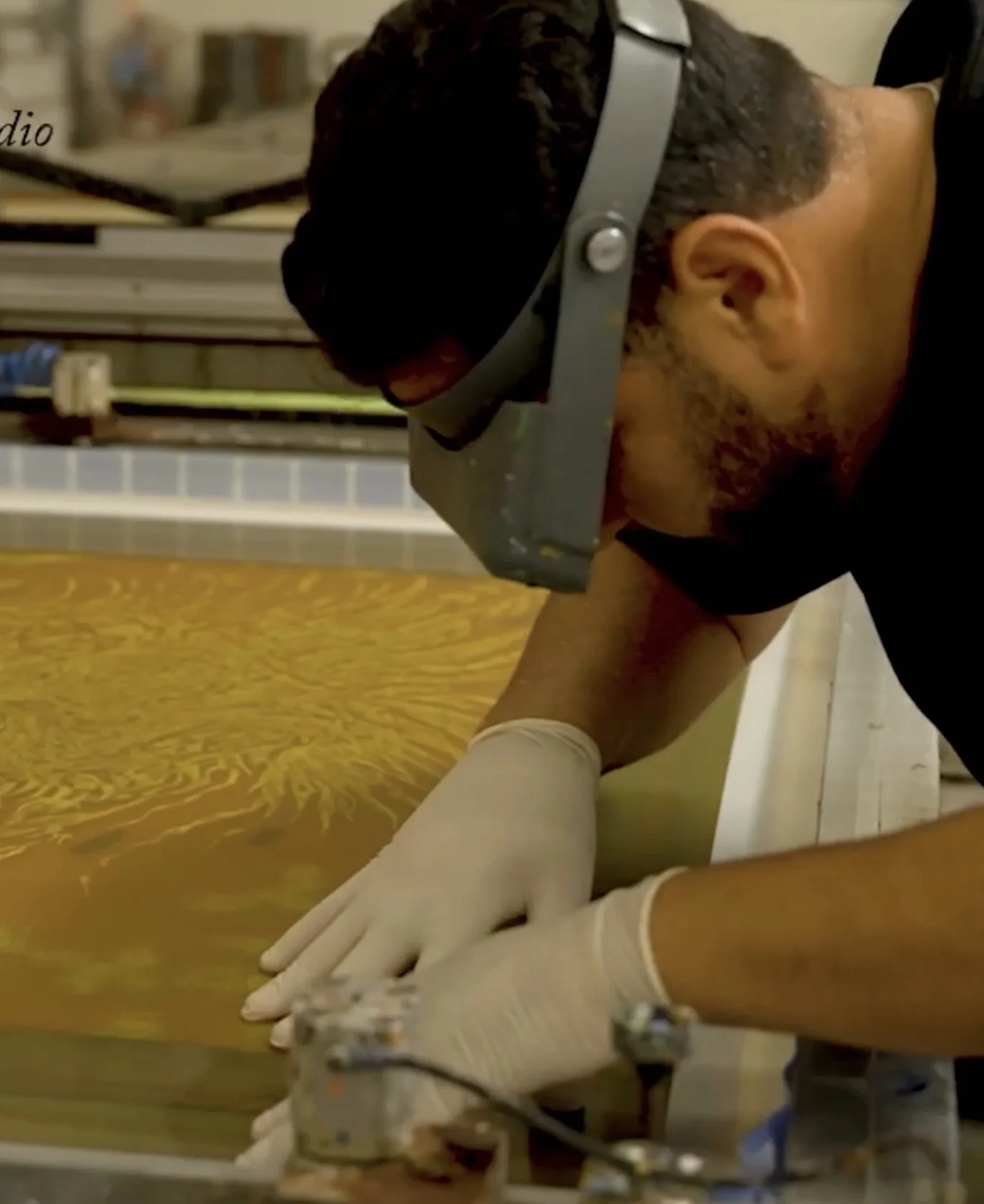
Getting the color right
Every title starts from the source, either a high-resolution capture of the original artwork or the approved reference held by the publisher. From there the image is separated in house into the layers that will build it, a digital process guided by a separator's eye and hand.
On a full serigraph every color is its own screen and the match is made in the ink, mixed by hand rather than chosen from a chart. On a hybrid the fine color work is dialed in on the digital layer, and serigraph is reserved for spot color, metallics, and varnish laid over the top.
Either way it is proof, compare, correct, and proof again, read under controlled lighting against the reference and never against a monitor. Rounds continue until the proof and the original agree. That impression is then archived as the standard every sheet in the edition is printed against.
“There's a lot of proofing that goes on back and forth. We're pushing and pulling different colors, we're integrating from digital to serigraphy, we're incorporating sometimes additional colors, varnishes. Everything has to be right. There's no room for error here.” - Bob Chase, Chase Art Companies
An edition is only finished when the last impression matches the first.
Editions that unfold over years
A Dr. Seuss edition is not always printed in one run. Some editions unfold over time, sometimes in batches spaced as much as two years apart, which means Kolibri holds a client's original files and assets between runs. For a licensor managing valuable trademarks, that is not a small thing to hand over.
It is also harder than it sounds. A print pulled two years after the first batch has to be indistinguishable from it, or the edition is not one edition.
So we keep the file open. The approved impression, the ink formulas, the screens and separations, the substrate and lot records, the press setup, and a running count of every impression printed. When the next batch is called, nothing is reconstructed from memory.
“In some projects we might complete the entire edition. In others it may be a rolling project where the edition unfolds over time. They're holding our files, and they're constantly going back and forth with us, with our assets.” - Bob Chase, Chase Art Companies
Built for the approval chain
An estate of this stature does not approve work casually, and it should not. Kolibri produces the proofs that go to the publisher and through to the estate for sign-off, and we build to what the approval process requires rather than asking it to bend around production.
Between rounds and between batches, we are holding a publisher's files, separations, screens, and approved proofs. Those stay in the studio, used only for the work they were provided for, and never shown. That has been the arrangement on this collection for 30 years.
If you publish licensed work, this is usually where friction with a printer starts. It is ordinary practice here.
“You can imagine, in my particular case, when I'm dealing with these highly valuable trademarks, that's something that we don't take lightly. I really appreciate the way in which Kolibri handles the material and rises to the occasion in that regard.” - Bob Chase, Chase Art Companies
Work like this starts with a conversation
Kolibri Art Studio has printed for the world's leading publishers, galleries, and estates since 1990, in serigraph, giclée, and hybrid editions. We take on a limited number of projects each year so each one gets the attention it needs.
If you are publishing an edition that has to be right, we would like to hear about it.
-
Hi, I’m Bob Chase, and I represent the estate of Dr. Seuss in a collection called The Art of Dr. Seuss Collection. Since the beginning of this project, I’ve worked with Kolibri. People ask me why, why Kolibri? And I think there are a couple of things that are really important to me with this project.
One is, we’re dealing with one of the most important American icons. He’s number three actually, or maybe number two, in the most popular estates in the world. So this is a very, very important project, and we can’t leave that to just anybody to help us recreate these artworks that Ted Geisel, who was Dr. Seuss, created in his lifetime. We have to work with the absolute best. That’s full stop.
So in working with Kolibri, what’s happened over the years is we’ve become sort of like left hand, right hand. We can anticipate what we need to do with certain images. The team here knows where a particular piece needs to go in order to maintain the fidelity and faithfully reproduce the image. So they’re already a step ahead, which I love.
And then the other part of this for me, it’s a little bit about legacy. I come from a printmaking background. It’s important to me, the historic nature of printmaking. And so what we’re able to do with Kolibri, and virtually nobody else does this in the world, is marry the newest technology available in printmaking together with some of the most important historic printmaking techniques, and bring those two together. And I think by doing that, the objects that are created in that moment have a resonance to them that wouldn’t be possible otherwise.
There are things that you can accomplish in digital printmaking, such as this incredible spectrum of color, that’s amazing. But there are also things that you get out of serigraphy that are just incredible, that digital printmaking can’t do. So when you bring those two things together, it’s sort of like magic happens, and there are very few people in the world who can do it, certainly anybody who can do it at this level.
It’s so much more than just an image on paper or canvas or whatever the substrate might be. It’s really like a piece of history. Certainly in our project I feel like it’s a piece of history, because these are historic artifacts that Dr. Seuss made throughout his lifetime. So that’s really special.
So what goes along with a project like I’m speaking of, where we take this kind of care to make these objects, is the integrity and the trust that goes into it. And that’s a relationship that is really valuable for me and my company, together with Kolibri. In some projects we might complete the entire edition, whereas in other projects, depending on how it’s being made, it may be a rolling project where the edition unfolds over time.
And what that means is that they’re holding our files, and they’re constantly going back and forth with us, with our assets. You can imagine, in my particular case, when I’m dealing with these highly valuable trademarks, that’s something that we don’t take lightly. And I really appreciate the way in which Kolibri handles the material and rises to the occasion in that regard.
So as part of that, I mentioned this months-long process from concept to actual execution of a project. There’s a lot of proofing that goes on back and forth, and it’s a collaboration where we’re pushing and pulling different colors, and we’re integrating from digital to serigraphy. We’re incorporating sometimes additional colors, varnishes.
I’m really grateful for their willingness to continue to push the boundaries of that process, because we do a lot of proofing to get it just right, to make sure that the composition is correct. Everything has to be right. There’s no room for error here, and that’s something that they take very seriously, and I really appreciate that.